


A senior leader is called away to manage a crisis. Who can make the decisions that would normally land on their desk? The answer depends on what colleagues already know, what information they can access and what they have the authority to do.
Organisational resilience is the ability to adapt to disruption and keep essential work going. Business continuity identifies the activities that need to carry on. Crisis response is how people act as events unfold. Some decisions belong well before that point, including who can act for the organisation and which functions must be able to operate independently.
Four contributors from the BCCS network look at those decisions from the perspectives of corporate governance, AI, succession planning and legal preparedness.
Change of leadership: when board should consider a change
A natural disaster, a cyberattack or human error can trigger a crisis. So can an event in a leader’s personal life. A single message or decision can shake the trust of customers and partners and leave employees feeling less secure. For the board, the immediate question may be whether the leader should stay.
NVIDIA faced that question in November 2026. On 8 November, its board announced an independent investigation into reports that its chief executive, Jensen Huang, had been targeted by a foreign intelligence effort. Four days later, the company announced Huang’s resignation and named its chief financial officer, Colette Kress, as interim CEO.
Agnė Daukšienė, CEO of ExpertLab, argues that a resignation can be the right decision, even a necessary one. Yet when an organisation depends on one person’s reputation, relationships or judgement, their sudden departure can deepen the crisis. Under public pressure, boards and senior leaders have to answer three questions:
What actually poses the greatest threat to the organisation?
Does the leader remaining in their position help contain the crisis, or does it make it worse?
Would the organisation be able to function if that person were no longer there tomorrow?
The third question often reveals how resilient the organisation really is.
“There is no one-size-fits-all solution. During a crisis, senior leadership and the board must be able to distinguish external noise from genuine threats to the organisation. They must consider not only the immediate reputational impact but also the long-term interests of employees, customers, shareholders, and the organisation’s wider ecosystem.”
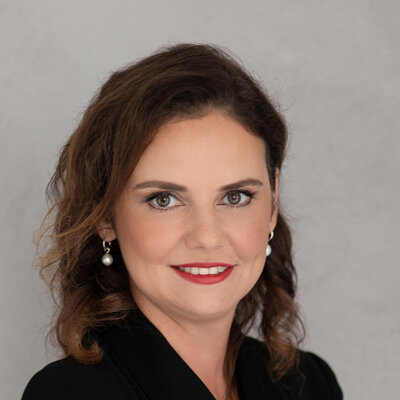
Agnė Daukšienė, CEO of ExpertLab
A communications plan can guide what the organisation says. Making the decision itself takes experience, a range of expertise on the board and in management, and clear authority to act quickly. That is why Agnė recommends forming a crisis management team in advance.
“Perhaps, then, the most important question for a leader is not: ‘Is our organisation prepared for a crisis?’ A more important question is: ‘Is our organisation prepared for a crisis we cannot even imagine today?’”
Agnė Daukšienė, CEO of ExpertLab
Making decisions when AI goes offline
Imagine a logistics company that uses AI agents to coordinate deliveries, manage stock and respond to disruptions. If its cloud-based AI provider goes offline, all three activities could stall at once. Which of them must keep running, and has the company tested whether that is possible?
Eddie Smith, Chief AI Strategy Officer of WyrdIT explains that in these situations is important the test of resilience which shows whether a team can keep making informed decisions during the outage. Several automated workflows may rely on the same model. Losing access to it can take away both the tools people use to do their work and the information they need to decide what to do next.
One option is to run an AI model locally so the most important work can continue without a cloud connection. That means deciding which functions must work independently, preserving the knowledge they rely on and keeping people involved in decisions. With those arrangements in place, a team can test how much of its work it can still do offline.
“It's a challenge I'm actively exploring through what I am calling the Resilient Edge Intelligence Engine (REIE) concept, with the goal of keeping essential intelligence and decision support available even when the infrastructure we normally depend on fails.”

Eddie Smith, Chief AI Strategy Officer WyrdIT
One application Eddie envisages is Prepare.me, an offline assistant for situations where widespread power and communications outages cut people off from cloud services. Its proposed role is to give people access to verified emergency guidance and help them make sense of a changing situation.
What a deputy needs before taking over
When a senior specialist steps away to manage a crisis, the rest of their work still needs doing. Who can take over their usual responsibilities? An unexpected absence or a resignation can expose the same gap.
In fintech, a single person may hold essential operational knowledge, manage relationships with regulators and have the authority to make decisions. For Aleksejus Loskutovas, CEO of HHHub, the risk lies in how much of that responsibility other people are actually ready to take on.
“Naming a deputy is not enough if that person has never been given access to the relevant information, included in key conversations or authorised to act independently.”

Aleksejus Loskutovas, CEO of HHHub
Before a crisis, organisations should identify where essential knowledge and decision-making authority are concentrated, define clear succession and delegation arrangements, and test whether critical responsibilities can genuinely be transferred.
“Resilience depends not only on having capable individuals but also on ensuring that the organisation can continue to make informed decisions without relying on any one of them.”
Aleksejus Loskutovas, CEO of HHHub
How leaders prepare for legal risks
When an organisation discovers a personal data breach, who records it and who notifies the regulator if a report is required? Paulius Sartatavičius, COO of CEE Attorneys, says most organisations he sees are on familiar ground here. Under the General Data Protection Regulation (GDPR), they have procedures for recording breaches, know which notification deadlines apply and have assigned responsibility in writing. They also have templates for the notices they may need to send.
“However, we also see different situations in practice. In areas where regulation is less developed or practical experience is more limited, such as artificial intelligence integration and its associated risks, organisations tend to devote less attention to preparedness.”

Paulius Sartatavičius, COO of CEE Attorneys
An emergency such as an armed conflict or a natural disaster calls for a broader response. A business continuity plan needs to cover how to relocate staff and data, who can make decisions if the usual leaders are unavailable, and what support critical suppliers have agreed to provide.
Sartatavičius also points to a risk that can arise in an ordinary transaction. A company signs a contract without checking the sanctions list and later discovers its new partner was already on it. In his view, it is the company’s leadership that must first answer for the missed check and its legal and reputational consequences.
“Regardless of the nature of the crisis, it is important to remember that a leader’s accountability is determined not only by how the crisis was resolved, but also by whether the necessary actions were taken in a timely manner. This includes notifying regulators, fulfilling contractual obligations, and informing insurers, banks, customers, and partners where required.”
Paulius Sartatavičius, COO of CEE Attorneys
What can staff tell customers and partners while the facts are still emerging? A hurried statement can mislead a customer, commit the company to a promise or inadvertently admit a breach. Sartatavičius recommends asking legal counsel to review draft messages in advance, training the staff who speak to customers or the media, and agreeing who can approve an external update.
For those arrangements to work, the people named in the plan need to know their roles and have the documents to hand. That lets them act without having to negotiate responsibilities during the crisis.
“The underlying principle remains the same in every situation: effective legal protection during a crisis does not begin when the crisis occurs. It is established well in advance.”
Paulius Sartatavičius, COO of CEE Attorneys
Four decisions for the next leadership meeting
Choose the crisis team. Agree who needs to be involved and what authority they will have if the leadership itself comes under scrutiny.
Identify the work that must continue offline. Decide which functions need to operate without a cloud service or AI model, then test them under those conditions.
Agree what a deputy can take over. Give them access to the relevant information and conversations, and test whether they can exercise the authority the role requires.
Assign responsibility for crisis notifications. Name the person responsible for each notice, record the deadline and agree who can approve the first public statement.
Continue the conversation
Crisis management is not just about having a plan. It's about making difficult decisions when circumstances change, information is incomplete, and the consequences are far from certain.
These are some of the questions we'll explore at ZERO DAY, where business and public sector leaders will discuss organisational resilience, leadership responsibility, and decision-making under pressure. From executive accountability to geopolitical uncertainty, the conversation will focus on the challenges leaders face when there are no easy answers.
Organised by BCCS and ExpertLab, the conference will take place on 2 December 2026, from 15:00 to 18:00 EET, at Grand Hotel Vilnius, Universiteto g. 14.
To continue exchanging ideas with fintech, technology, and risk professionals,connect with the BCCS Cluster.
Share this post